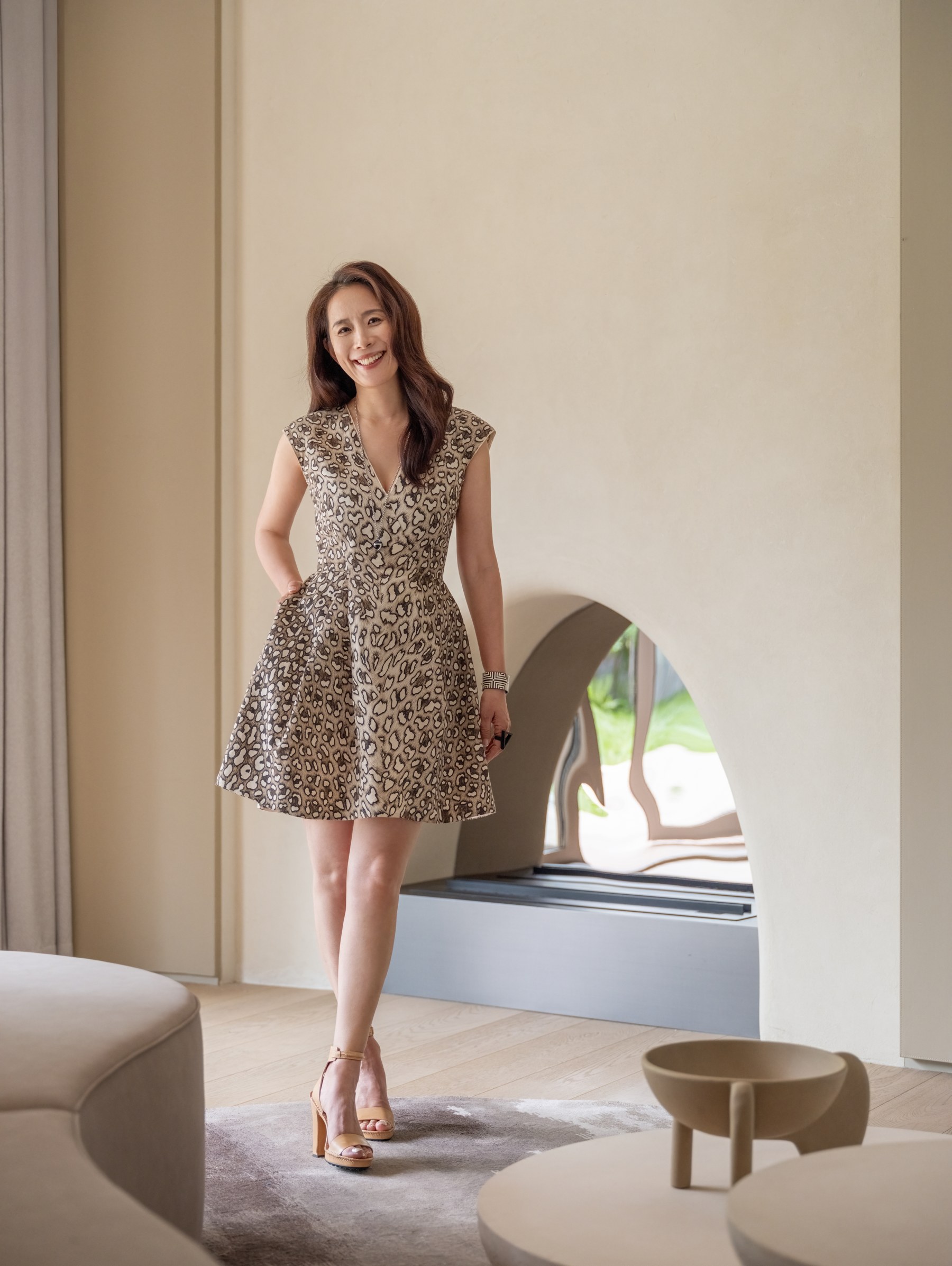
Lea Chen 陈暄
Architect, artist and interior designer
A personal approach to space.
Lea Chen founded Shishang Design & Architecture in Beijing in 2004. With a PhD in architecture from the Central Academy of Fine Arts, she works across architecture, interiors, furniture and art.
Her practice is particularly concerned with the home: the relationship between space and emotion, the rhythms of family life, and the freedom to make a place one's own. She approaches each commission through the people who will inhabit it, rather than a predetermined style.
A practice shaped by art
Shishang began in Beijing's 798 Art District, working with artists on galleries, studios and private residences. This early proximity to art remains an important part of Lea's work, informing her use of colour, objects and unexpected relationships between materials.
Her furniture work includes the Instinct collection and its Horse Leg Table, as well as Oriental Treasures, developed with VG and shown at the Salone del Mobile in Milan in 2018. These projects extend an interest in expression, proportion and everyday use beyond the scale of a building.
Life as a source of design
Lea's interests reach beyond architecture. Art, music and travel are recurring sources of observation, and her own homes have been places to test ideas about living.
In published conversations, she has described how travelling with her family changed her understanding of familiarity, privacy and security. Those reflections return to practical design questions: where to gather, where to be alone, what to keep close, and how a home can adapt as its inhabitants change.
A conversation
On homes, change
and leaving room for life.
Proposed edited Q&A · awaiting Lea’s approval.
Where does the design of a home begin?
It begins with the people who will live there. Their routines, relationships and expectations give the project its direction. The essential questions concern how a family wants to live, what helps them feel comfortable, and what may change over time.
What needs to be resolved from the start?
The foundations of living need to work: daylight, ventilation, circulation, acoustics, storage and building systems. Once those are considered properly, the arrangement of rooms and everyday settings can be more flexible. The home can support the present while leaving room for a different future.
How much should a designer leave open?
A home continues to develop after the design work is finished. People bring their own objects, habits and experiences into it. Giving everything a fixed form too early can limit that relationship. I am interested in creating a sound framework that allows life to keep shaping the space.
How has travel influenced your understanding of home?
Spending long periods away made me more aware of the comfort of familiar objects and everyday routines. A sense of home can be carried by a table setting, a pillow or a place to sit quietly. That experience made the feeling of being at ease more important in my approach to residential design.
What makes a home successful over time?
It should accommodate both shared life and independence. Family members need places to come together and places to withdraw. A good home supports those different needs and has enough freedom to change as the family changes.
Edited and translated from published conversations with Lea Chen in OO!SPACE and InStyle China.
Start here.
Contact us.
Tell us where your project is, what you hope to create, and how you would like to live or work.